
🌿 TL;DR
Small gardens are often more difficult to design than larger ones because every part of the space needs to work harder. In areas like Plymouth, compact courtyard and family gardens still need to balance seating, planting, practicality, safety and low maintenance without feeling overcrowded. This article explores why careful planning, strong construction methods, drainage, material choices and experience make such a difference in smaller outdoor spaces, and how thoughtful landscaping can completely transform how a garden looks and functions.
When people think about landscaping projects, they often assume larger gardens are the most complicated to design.
In reality, small gardens are frequently far more challenging.
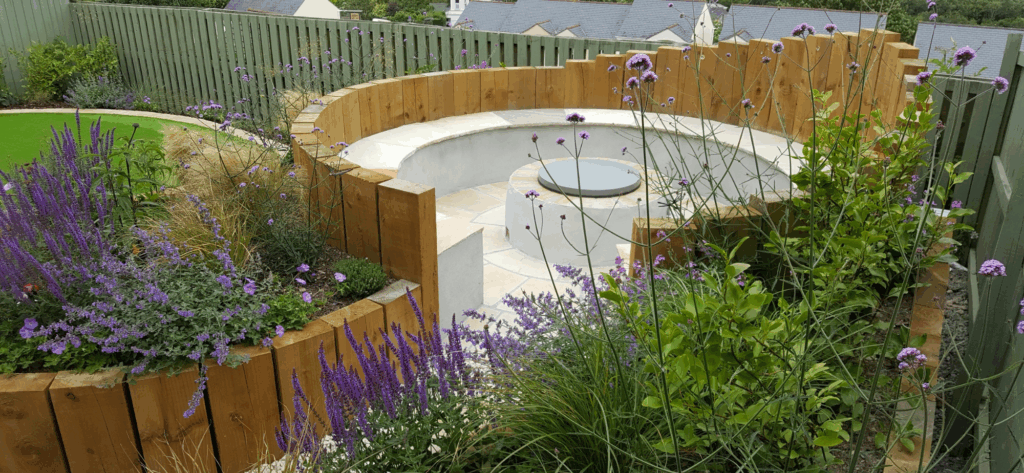
Across Plymouth — particularly in areas with Victorian terraces, Edwardian homes and modern new-build developments — we work on many compact outdoor spaces where every square metre matters. These gardens may be smaller in size, but they often need to work harder than larger spaces.
Clients still want somewhere to sit and relax, space for planting, room for children to play, practical access, low maintenance and a garden that feels attractive throughout the year. Trying to combine all of those requirements into a limited space takes careful planning, experience and attention to detail.
A well-designed small garden should never feel overcrowded or compromised. In many cases, the biggest challenge is knowing what not to include.
Every Part Of The Garden Needs A Purpose
In larger gardens, it is easier to separate areas into distinct zones. You may have room for multiple seating areas, larger borders, lawns, storage or entertaining spaces without them competing against each other.
Small gardens do not have that luxury.
Every element needs to earn its place.
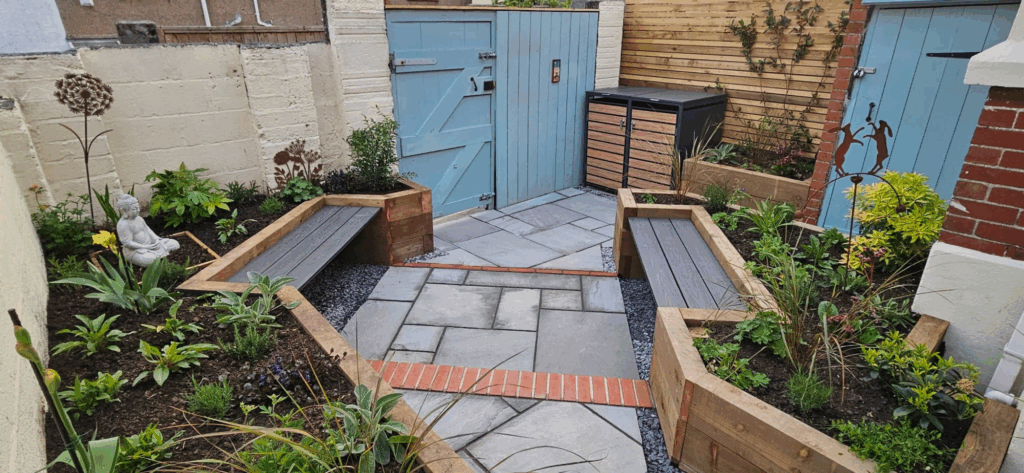
Paths need to feel natural and practical without dominating the space. Seating needs to feel comfortable without making the garden feel cramped. Planting needs to soften the hard landscaping while still remaining manageable throughout the year.
Often, one of the biggest mistakes we see in smaller gardens is trying to fit too much into them. Large patios, oversized furniture, excessive planting or awkward level changes can quickly make a compact garden feel cluttered and difficult to use.
Good design is often about restraint as much as creativity.
Levels, Drainage And Structure Matter More Than People Realise
Many people understandably focus on the finished appearance of a landscaping project, but the structural work underneath is often what determines how successful the garden will be long-term.
This is particularly true in smaller gardens where level changes can have a significant impact on usability and safety.
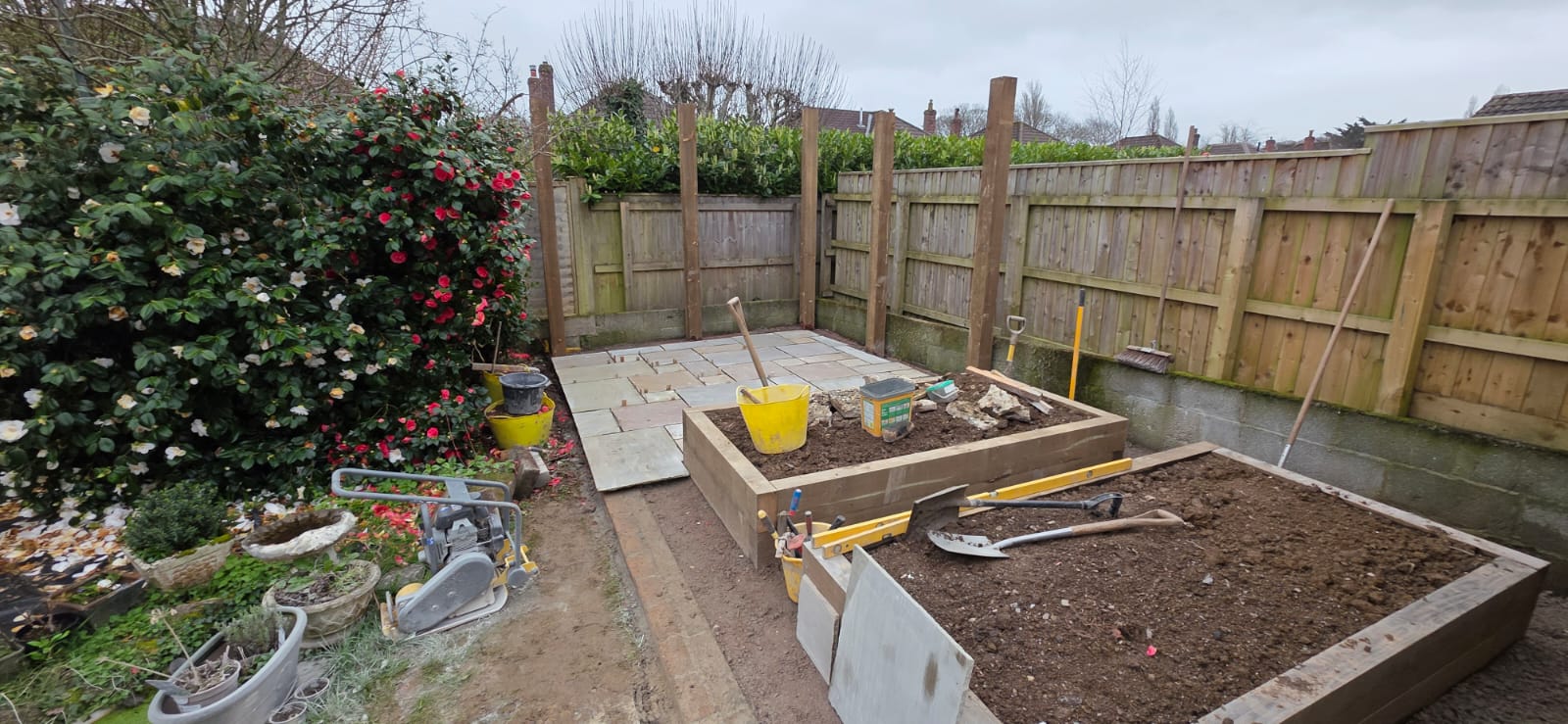
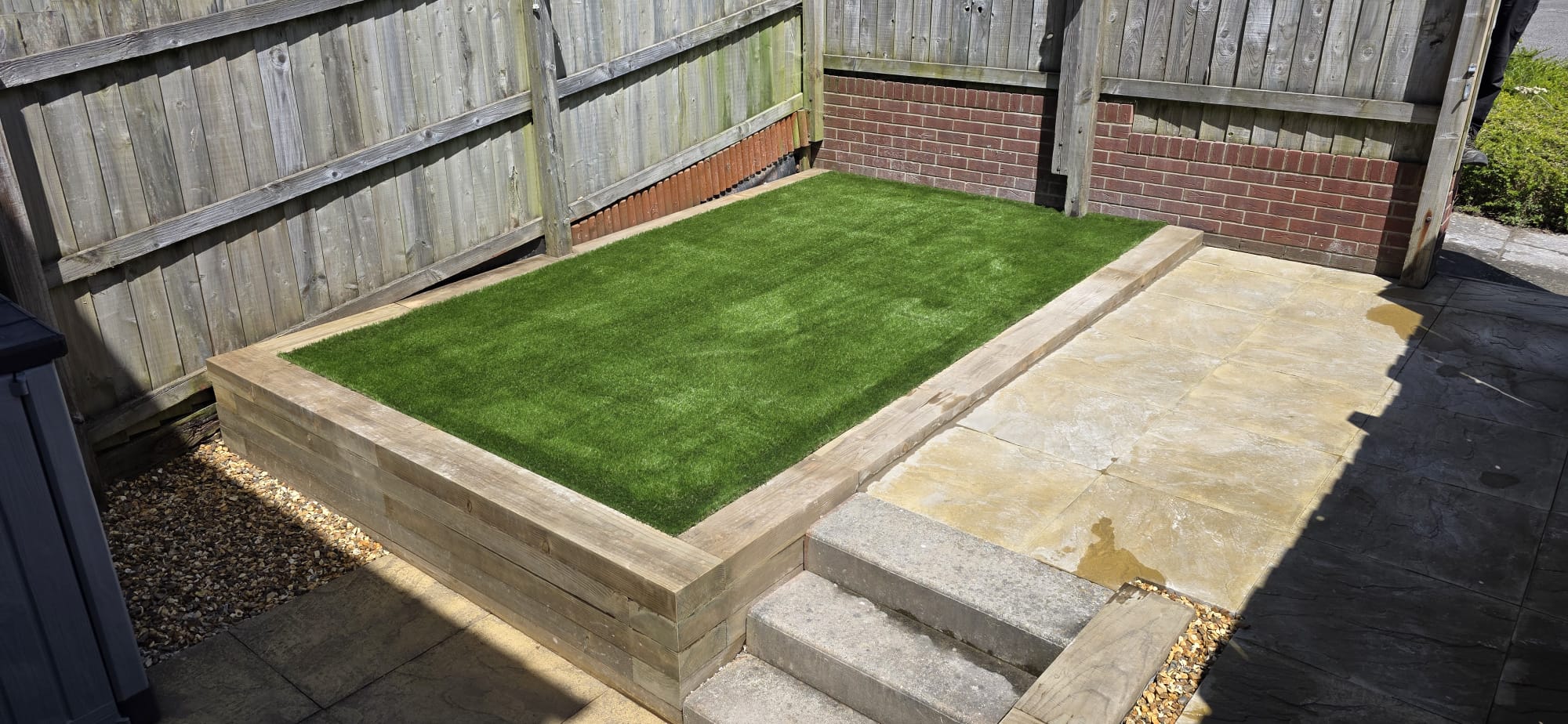
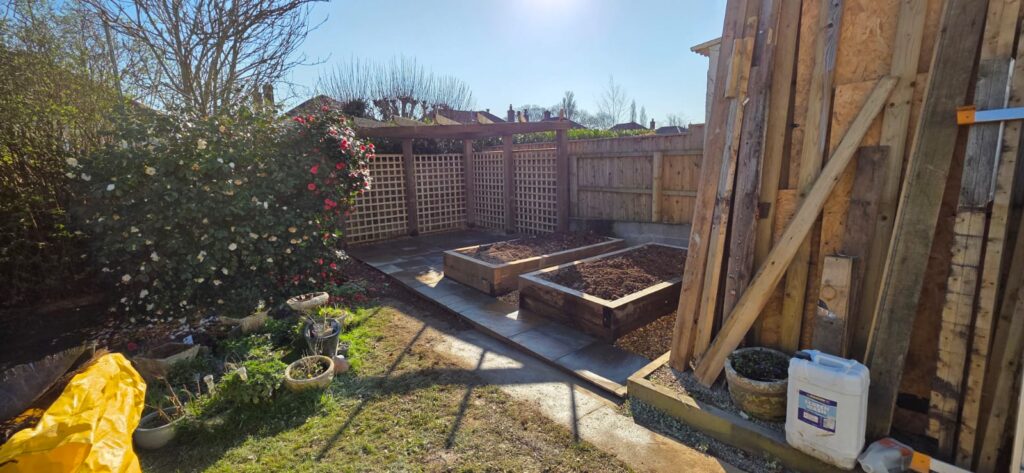
A recent project in Plymouth involved replacing a failed timber sleeper retaining wall in a compact family garden. The original structure had begun to rot, drainage was poor and the lawn had been badly affected by a leatherjacket infestation. The space no longer worked well for the family and had become increasingly difficult to maintain.
The new design focused on improving both practicality and longevity.
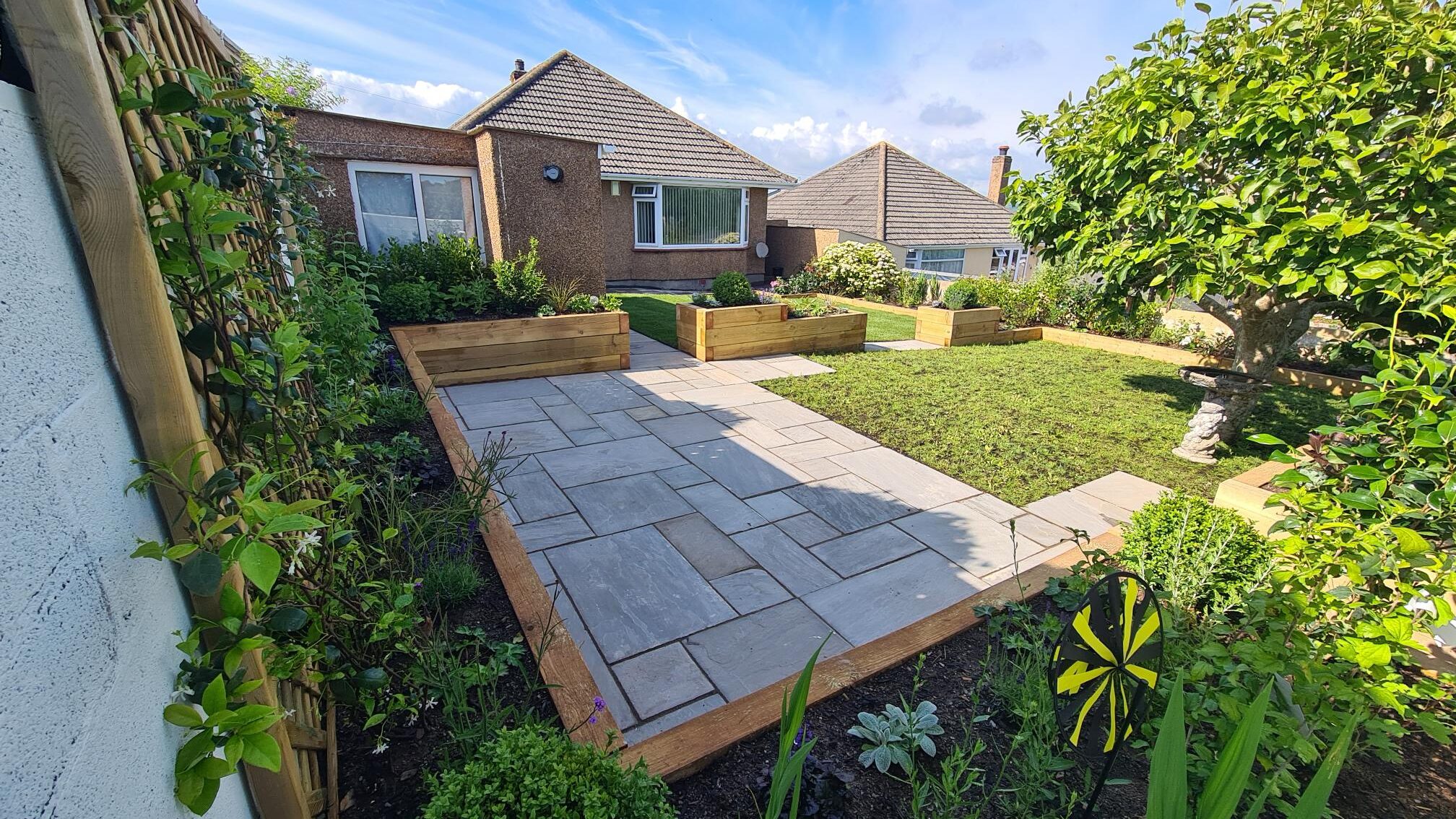
We rebuilt the retaining wall using a much stronger construction method with proper structural fixings, improved drainage and moisture protection to help extend the lifespan of the timber. The upper garden area was then redesigned to create a clean, usable combination of paving and artificial lawn, providing a safer and more functional outdoor space for the client’s young family.
Projects like this are a good example of how landscaping is often about solving problems rather than simply changing appearances.
Materials Have A Huge Impact In Smaller Spaces
Material choice becomes even more important in compact gardens because every surface is seen up close.
The size of paving slabs, the colour tones used, edging details, timber finishes and planting style all influence how spacious the garden feels. Smaller spaces benefit from materials that create simplicity and cohesion rather than visual clutter.
This does not necessarily mean everything needs to feel minimal or modern. Some of the most successful small gardens combine traditional materials with contemporary layouts, particularly in Plymouth’s older properties where it is important to respect the character of the home.
The goal is usually to make the space feel calm, balanced and easy to use.
Low Maintenance Does Not Mean Characterless
Budget is something many people feel uncomfortable discussing, but it’s one of the most important parts of the process.
Many clients now want gardens that are easier to maintain without feeling artificial or sterile.
That balance is particularly important in smaller spaces where even small amounts of untidy growth can quickly make the garden feel overwhelmed.
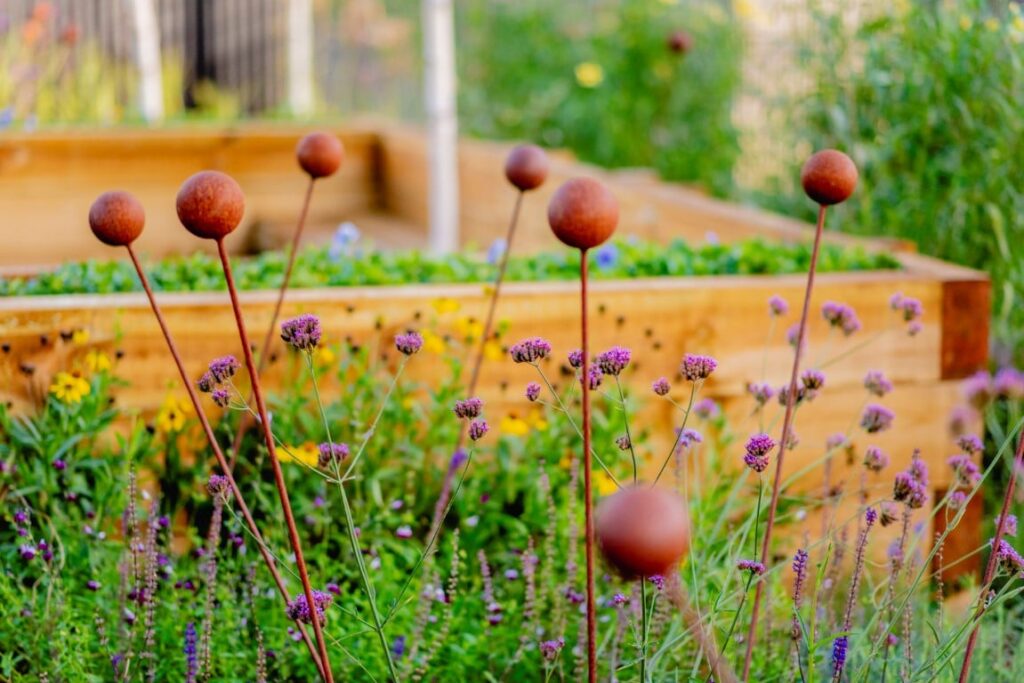
Thoughtful planting, evergreen structure, sensible material choices and durable construction methods all help create gardens that remain attractive throughout the year without becoming high-maintenance.
Artificial grass can also work well in certain situations, particularly in family gardens or heavily shaded areas where natural lawns struggle repeatedly. Like any material, it works best when used appropriately and as part of a wider overall design.
Experience Makes A Significant Difference
Small gardens often appear deceptively simple.
In reality, they usually require more problem-solving than larger projects because there is less room for compromise. Minor decisions around spacing, levels, drainage or layout can completely change how the finished garden feels and functions.
Often, clients initially believe very little can be done with their outdoor space because of its size. However, with careful planning and experience, even compact gardens can be transformed into practical, attractive spaces that genuinely improve everyday life.
For us, that is always the most rewarding part of landscaping.
Not simply creating a garden that looks better — but creating one that works better for the people living in it.
📞 01752 312 111
📧 office@waterlillieclark.co.uk
🌐 waterlillieclark.co.uk/contact