
🌿 TL;DR
Buying plants is easy.
Creating a beautiful garden is an art.
The secret isn’t having more plants, it’s choosing the right ones, repeating them with purpose and planning before you plant.
If your borders aren’t quite working, the answer probably isn’t another trip to the garden centre… it’s a better planting plan.
Buying plants is easy. Creating a beautiful garden is something else entirely.
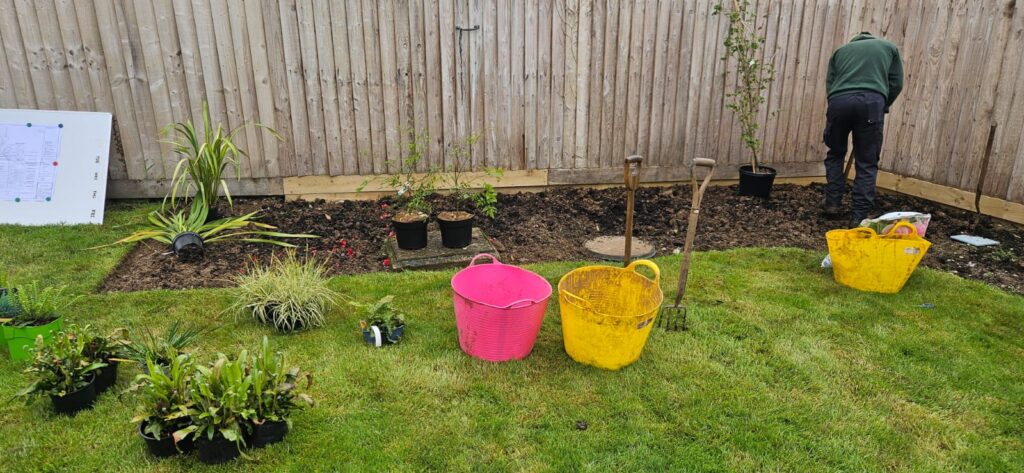
Walk into any garden centre on a sunny Saturday morning and you’ll see trolleys full of colourful plants heading towards the tills.
A lavender because it smells lovely.
A bright yellow perennial because it catches your eye.
A shrub that’s on offer.
Perhaps a grass because you’ve seen one in a magazine.
There’s nothing wrong with buying plants you love.
In fact, that’s exactly how many of us first become interested in gardening.
The problem is that beautiful planting schemes aren’t created one plant at a time.
They’re designed.
Why do some gardens look so much better than others?

Have you ever walked around a National Trust garden or an RHS show garden and wondered why everything seems to work so effortlessly together?
It’s rarely because they’ve spent more money.
It’s because every plant has been chosen for a reason.
Professional planting isn’t simply about selecting attractive flowers.
It’s about creating balance, structure, rhythm and interest throughout the entire year.
When we design a planting scheme, we’re not just thinking about what will look good this weekend.
We’re thinking about how the garden will look next spring, next autumn and even several years from now.
That’s a completely different way of thinking.
The mistake we see time and time again
One of the most common mistakes we see is buying one of everything.
It makes perfect sense at the time.
You see something beautiful.
Into the trolley it goes.
Then another.
Then another.
Before long you’ve bought fifteen completely different plants.
The result?
Unfortunately, it often ends up looking busy rather than beautiful.
There isn’t enough repetition.
The colours compete with each other.
Different plants flower at different times, leaving gaps later in the year.
Nothing really ties the whole border together.
Take another look at this photograph…
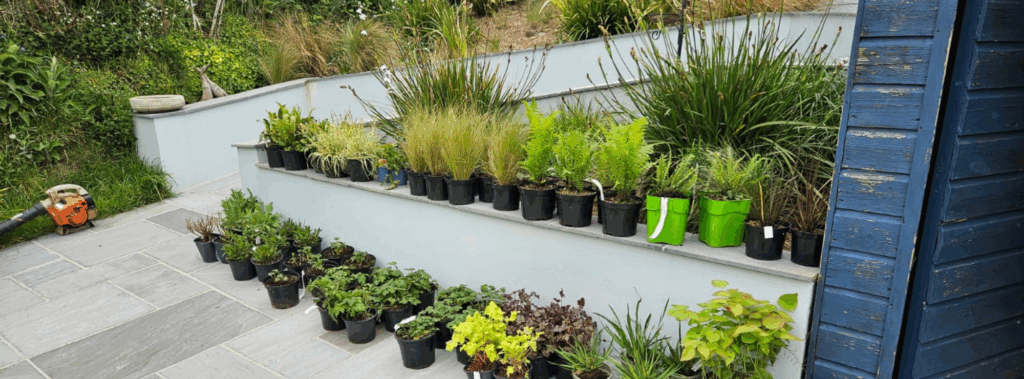
At first glance it looks like a collection of plants waiting to go into the ground.
But look a little closer.
You’ll notice there are several of the same plants rather than one of everything.
That isn’t by accident.
Repeating plants throughout a border creates rhythm.
It naturally guides your eye through the planting and gives the whole garden a calm, cohesive feel.
Ironically, using fewer varieties often creates a far more impressive result.
Before we plant a single thing, we’re already thinking about…

Height
Every border needs layers.
Lower-growing plants soften the front.
Medium-sized perennials provide colour.
Taller plants create structure and draw the eye upwards.
Without different heights, planting can quickly become flat and uninteresting.
Colour
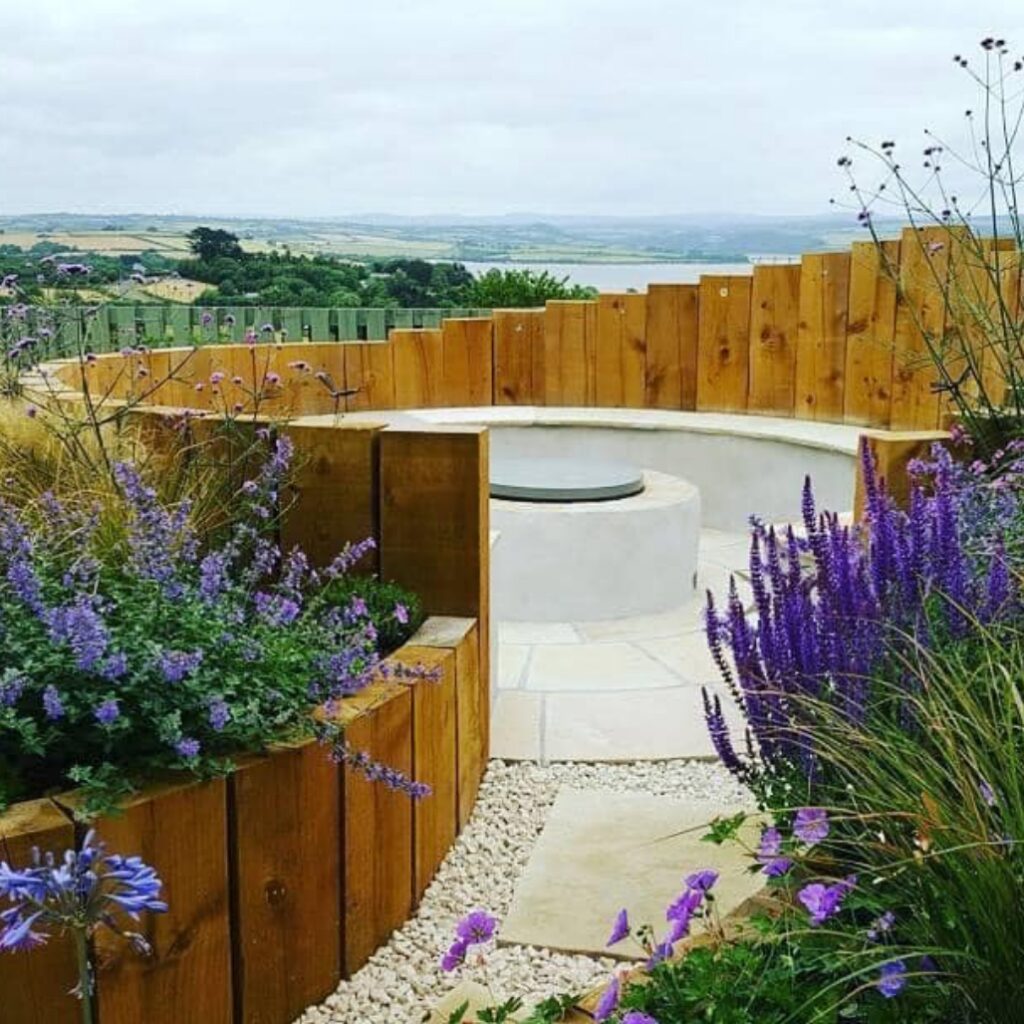
Colour should complement rather than compete.
A simple palette of blues, purples and whites often feels much calmer than every colour under the sun.
Repeating those colours throughout the border helps everything feel connected.
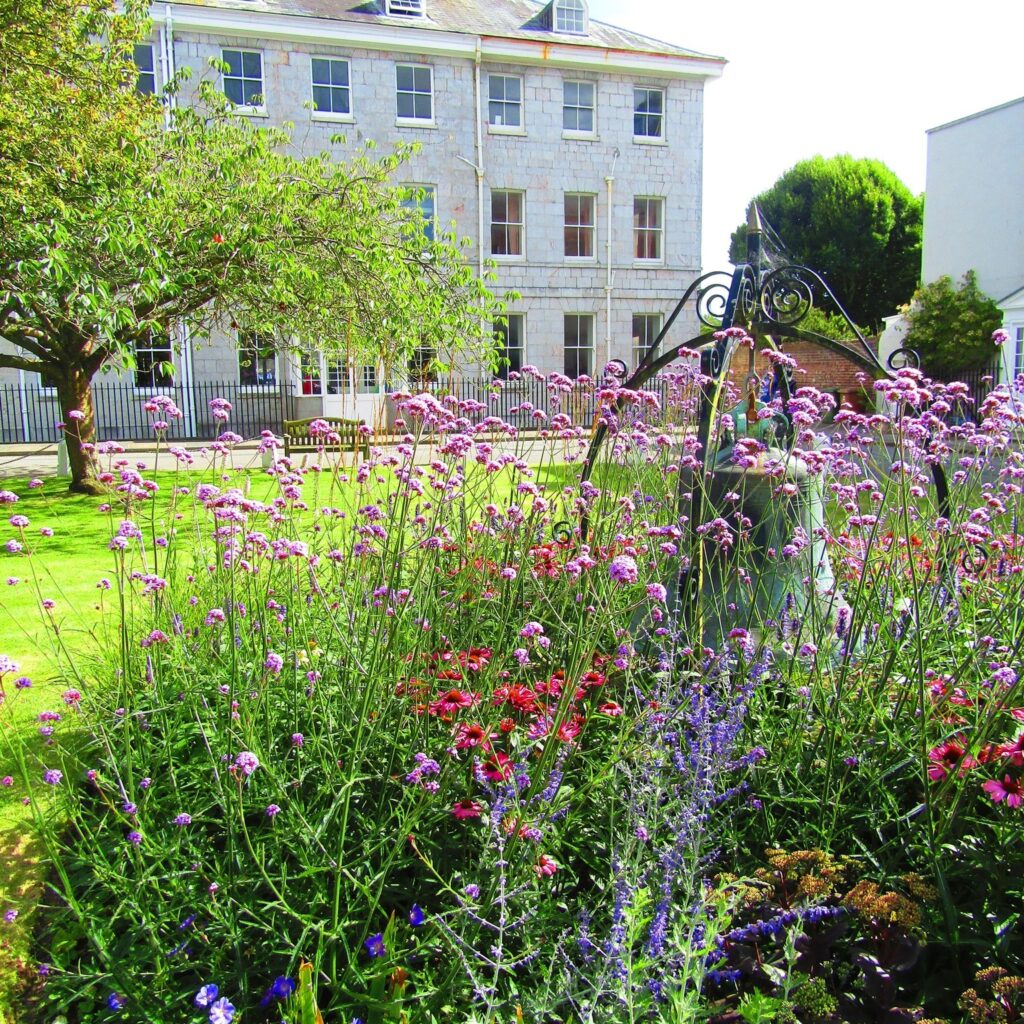
Flowering season
One of the biggest disappointments is creating a beautiful border that only flowers for a few weeks.
We choose plants that perform at different times of the year so there’s always something to enjoy.
As one plant finishes flowering, another begins.
The garden is constantly changing.
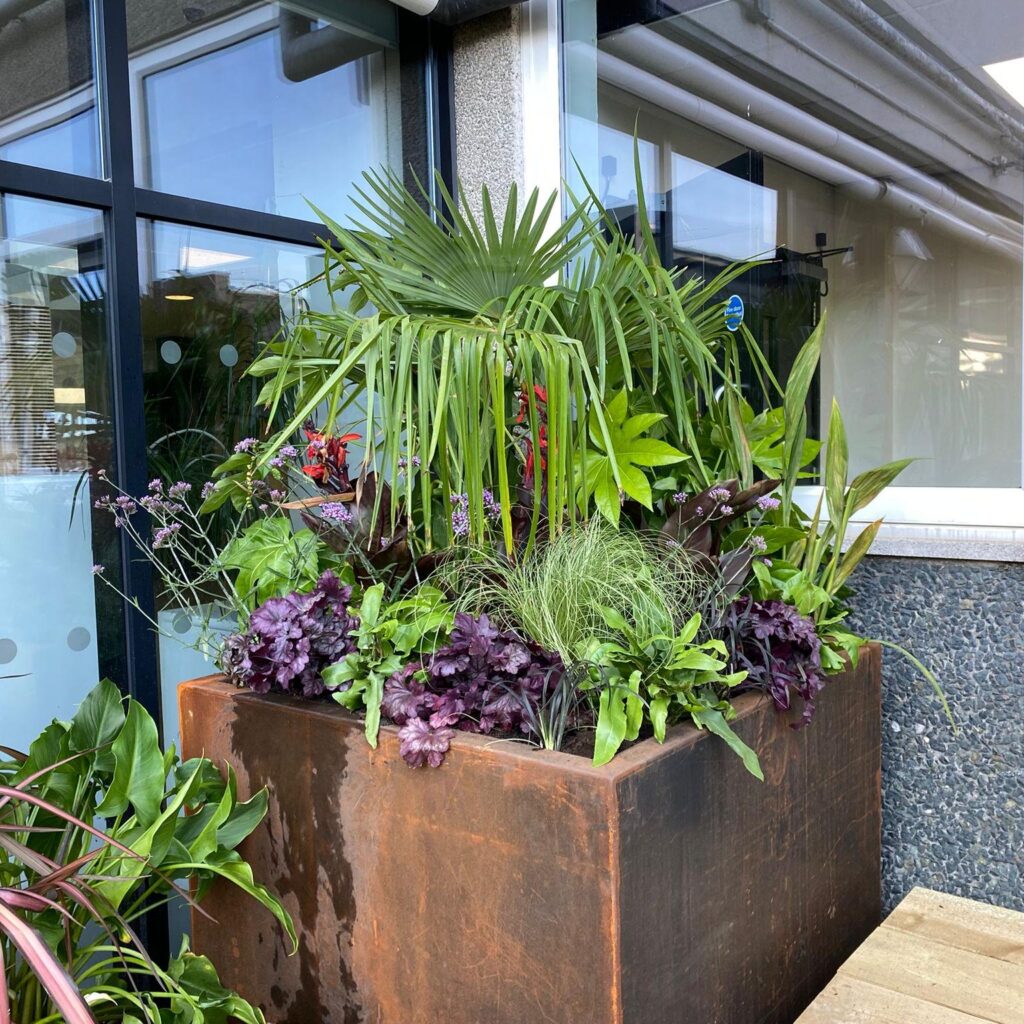
Structure
Not every plant needs spectacular flowers.
Grasses, evergreens, interesting foliage and seed heads.
These are the plants that quietly hold everything together, even when little else is flowering.
A great border should still look attractive in November, not just June.

Wildlife
Beautiful gardens should also be full of life.
Many of the plants we choose are loved by bees, butterflies and other pollinating insects.
Watching a garden come alive with wildlife is one of the greatest rewards of thoughtful planting.
Think five years ahead, not five weeks
Another mistake many people make is planting everything too close together.
It can look fantastic on day one.
By year three, everything is fighting for space.
Good planting requires patience.
Those gaps you see today are there for a reason.
Plants grow.
Borders mature.
Gardens evolve.
Some of the most beautiful gardens we’ve ever worked on looked surprisingly sparse when they were first planted.
Can you plant in summer?
Absolutely.
Although autumn and spring are often considered ideal planting seasons, summer planting can be very successful too, as long as it’s done properly.
The key is selecting the right plants, preparing the soil well and watering consistently while everything establishes.
In fact, summer is often the perfect time to stand back and assess your garden.
Which areas feel empty?
Where would you like more colour?
What isn’t working?
Making those observations now allows plenty of time to plan improvements for the months ahead.
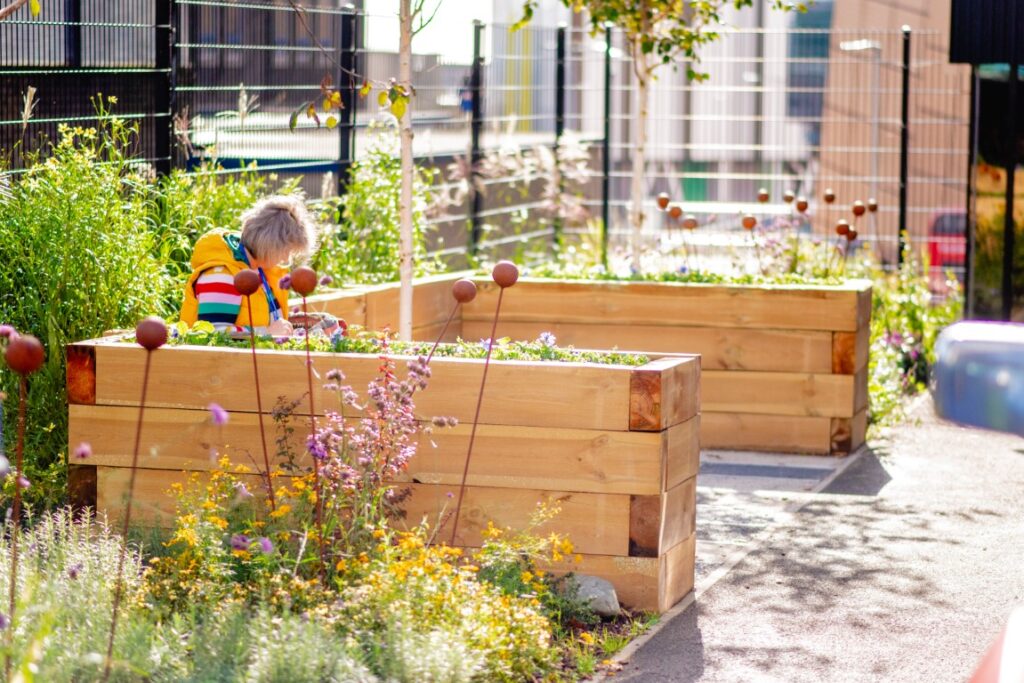
A beautiful garden starts long before the first plant goes into the ground
The biggest difference between an average border and one that people stop to admire isn’t usually the budget.
It’s the planning.
Choosing the right plants.
Repeating them thoughtfully.
Allowing space for them to grow.
Thinking about every season, not just today.
That’s what transforms a collection of individual plants into a garden that feels balanced, natural and full of life.
If you’re looking at your borders this summer and feeling like something’s missing, it might not be more plants that you need.
It might simply be a better plan.
Thinking about improving your planting?
Whether you’re refreshing a tired border, creating a new planting scheme or planning a complete garden transformation, we’d be delighted to help.
At Waterlillie Clark, we believe great gardens don’t happen by chance, they’re carefully planned, thoughtfully planted and beautifully maintained.
If you’d like to discuss your ideas, we’d love to hear from you.
📞 01752 312 111
📧 office@waterlillieclark.co.uk
🌐 waterlillieclark.co.uk/contact